Welcome To the WPC Blog
ABOUT The Coalition
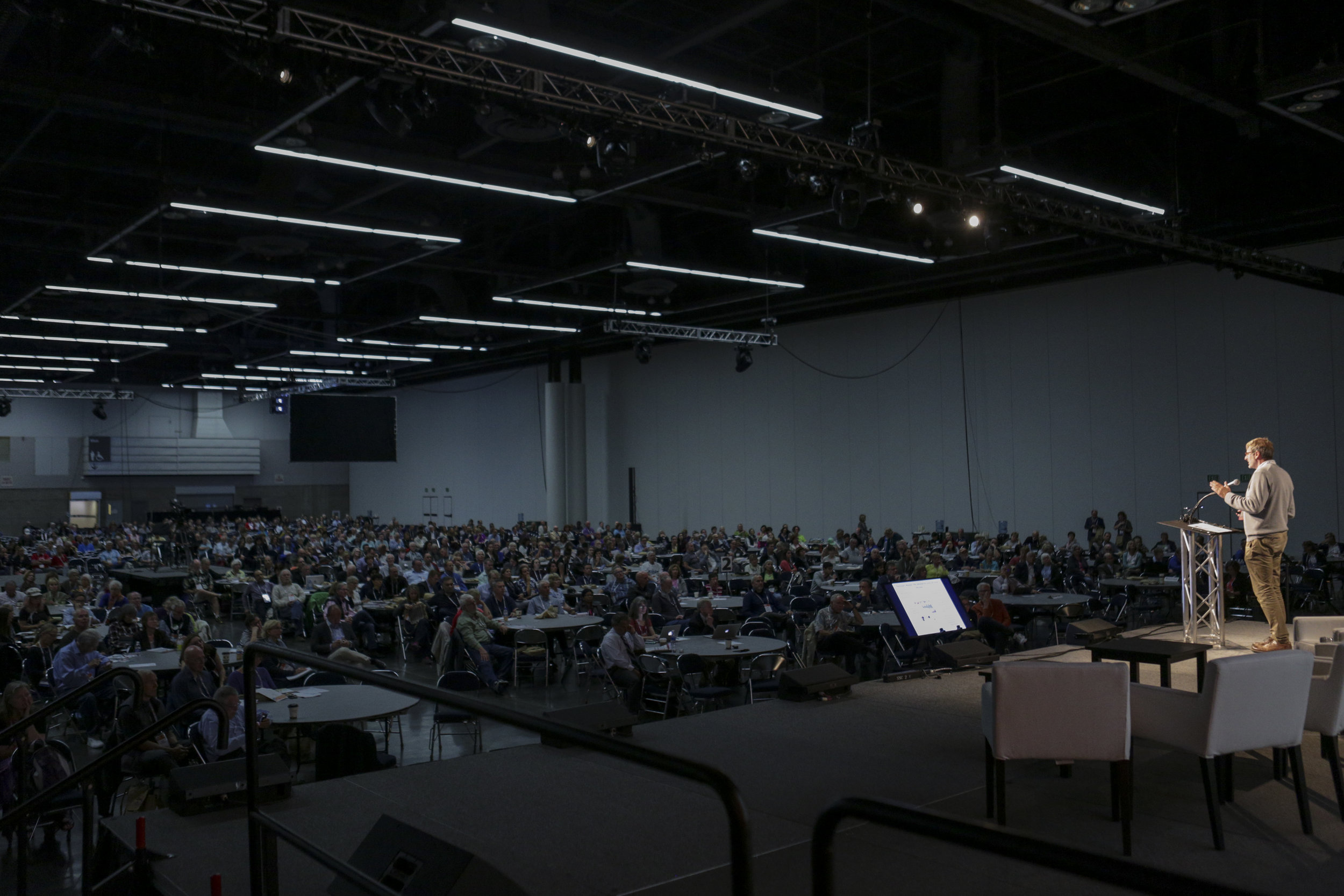
The World Parkinson Coalition® was founded in 2004 to address a need in the Parkinson’s community -- to get experts out of their silos in order to share their work with others, including people with Parkinson’s who know what it means to live with the disease and who can help identify research priorities. At the time, there was virtually no interdigitation of Parkinson’s experts, and rarely, if ever would neuroscientists and people with Parkinson’s cross paths. There were only a few opportunities for clinicians across the spectrum to share their research outside of their community. Since then, the WPC has hosted six World Parkinson Congresses, attracting nearly 20,000 delegates from across the globe. These inclusive scientific Congresses are unique because they bring physicians, scientists, nurses, rehabilitation specialists, caregiver/ partners and people with Parkinson's together to gain insight from one another and make connections to improve the research and treatment of Parkinson’s until a cure is found.
about THE BLOG
In between the triennial Congresses we aim to keep the Parkinson’s community connected and up to date on the latest research. The WPC offers a unique perspective by having access to authors around the world who are tackling Parkinson’s through science, clinical care, rehabilitation, and advocacy. We invite authors, all past speakers and committee members, to write about the topics that inspire them and which they feel are the most important to the community. Because we work with the leading clinicians, researchers, and advocates on the planet, we are able to present insights to you from the front lines around the world in the fight against Parkinson’s.
Our posts come from men and women who identify as junior and senior neuroscientists, clinical researchers, leading physical therapists, speech language pathologists, advocates, social workers and others from around the world. Science knows no boundaries. The WPC believes that including a wide range of expert voices we will learn faster and achieve our goals more quickly.
The WPC Blog is SPONSORED by

about the Congress
The World Parkinson Congresses provide an international, interdisciplinary forum showcasing the most important developments in the world of PD. As medical advances continue to accelerate, the goal of the WPC is to advance an all-encompassing approach to the treatment of Parkinson’s by bringing together the full spectrum of those who serve the Parkinson’s community and those who live with PD. These will include representatives of professional medical and scientific organizations; nurses and rehabilitation professionals; voluntary, lay, and patient services organizations; the pharmaceutical industry; and the research and health services ministries of national governments, and of course people living with PD and their care partners.
Our MIssion:
The World Parkinson Coalition provides A Unique INTERNATIONAL FORUM ON Parkinson's disease BY BRINGING TOGETHER PHYSICIANS, neuroSCIENTISTS, NURSES, REHAB SPECIALISTS, CARE PARTNERS AND PEOPLE WITH PARKINSON'S under one roof. each WORLD PARKINSON CONGRESS allows for DIALOGUE with experts who are invited out of their “silos” TO
learn, discuss and explore in the hopes this interdigitation will EXPEDITE THE DISCOVERY OF
new and IMPROVED TREATMENTS FOR THIS DEVASTATING DISEASE UNTIL A CURE IS FOUND.