Raising The Voices Of The Global Parkinson’s Community Through A Massive Open Online Course (MOOC)
Earlier this year, more than 26,000 people from over 160 countries enrolled in the University of Tasmania’s Parkinson’s MOOC. Within just four months, it was ranked 4th out of over 12,000 Health and Medicine MOOCs worldwide on independent website Class Central.
A MOOC—Massive Open Online Course—is designed to be accessible to everyone, everywhere. “Massive” because it’s open to a global audience, and “Open” because it’s free. People living with Parkinson’s, their families, carers, health professionals, and anyone curious to learn can enroll and complete the course at their own pace. The MOOC offers evidence-based information to dispel myths about Parkinson’s, but it’s also about connection, community, and hope.
Michele Callisaya, Professor of Physiotherapy at the University of Tasmania—and who also lives with Parkinson’s, is co-lead of the MOOC. She will be hosting a roundtable on the MOOC at the 7th World Parkinson Congress (WPC) in Phoenix. In this blog she will explain how the course came to life.
How Friendship Sparked a Global Parkinson’s MOOC
When my friend and colleague Professor Jane Alty suggested we create a Parkinson’s MOOC, I was initially hesitant. I had been diagnosed with Parkinson’s just a year earlier and was still navigating what that meant for my life, my work, my partner, and my future. At the time, we didn’t have the funding, so the idea sat quietly in a folder on Jane’s computer.
Jane, a practicing neurologist and Professor of Neurology at the University of Tasmania, is an expert in movement disorders. She’s smart, creative, and fun to work with—but more than that, she’s kind. Over countless cups of coffee, she patiently listened as I processed my diagnosis, answering my many questions about symptoms and medications. When I mentioned that I didn’t know anyone else my age with Parkinson’s, she immediately connected me with a friend of hers also with younger onset Parkinson’s. I realized how fortunate I was to have access to such knowledge and support—something many others don’t have. Could a MOOC do this too?
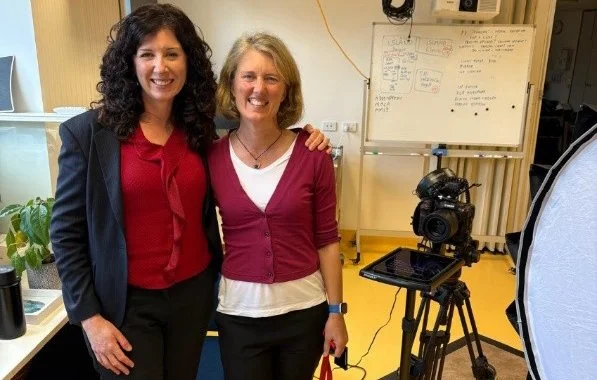
Jane and Michele
Later in 2023, Jane and I attended the 6th World Parkinson Congress in Barcelona to listen, learn and connect with experts from around the globe. It was a life-changing experience for me. Unlike many other conferences there were many people who were not expert clinicians or researchers - but were people with PD and their families – experts in their own condition. I met so many people doing incredible things from advocacy, research, art to supporting others. The sharing of experiences on and off stage added an important element to the meeting. What if we could bring this sense of community and expert knowledge into people’s homes? What if we could challenge stereotypes, dispel myths, and raise global awareness through a Parkinson’s MOOC?
Fast forward to 2024. Two generous philanthropists, Michael Katz and Richard Balanson from the Parkinson’s Research Foundation (PRF), visited us at the University of Tasmania. When the friends heard about the MOOC, they offered to fund it. Both have personal connections to Parkinson’s—Richard has Parkinson’s, and Michael’s wife also lives with the condition. Their support made the MOOC a reality.
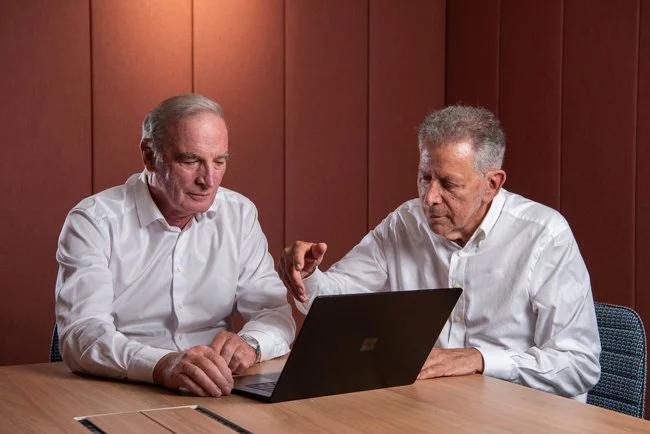
Michael and Rich
A Course that inspires hope and raises the voices of the global Parkinson’s community
We wanted the MOOC to have some of the special aspects of the WPC, including its inclusivity, global community and creativity.
The MOOC features over 90 personal stories and expert insights from people living with Parkinson’s, their families, researchers, and clinicians. Representing the Parkinsons’ community from diverse countries, cultures, genders, and ages, these voices offer so much knowledge where people with Parkinson’s and professionals can learn from each other. Our goal was to foster connection, provide hope and leave people feeling less alone.
We are incredibly grateful to those we interviewed over zoom and in person. Many you might be familiar with such as Professor Bas Bloem, Professor Michael Okun, Professor Bindu Menon, Two Parkies in a Pod host Kuhan, Twitchy woman host and WPC 2026 Ambassador, Sharon Krischer, dietician and WPC 2023 Ambassador, Richelle Flanagan and many more.
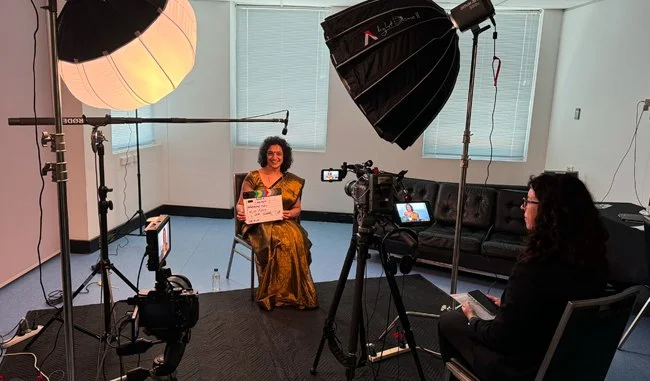
Jane interviewing Bindu Menon
Beyond education, we wanted to fill everyone’s ‘dopamine bucket’. The course includes creative pieces from people with Parkinson’s—photography, art, and music. We also showcase Tasmania’s stunning landscapes, from wild beaches to temperate rainforests and rugged mountains, accompanied by music from the Tasmanian Symphony Orchestra.
What You’ll Learn
The course is structured into five engaging modules, each featuring video interviews, interactive activities, expert commentary, and real-life stories:
Introduction to Parkinson’s
Signs and Symptoms
Pathology and Risk Factors
Medical Management – including medications, surgical options, and emerging therapies
Living Well with Parkinson’s – the role of the multidisciplinary team and practical strategies for maintaining quality of life, independence, and wellbeing
Voices from the Community
You can read independent reviews of the MOOC on Class Central. Here’s what some participants have said:
“It completely changed my ideas about Parkinson's. The contributors were truly impressive and inspiring. It left me full of hope.”
“This MOOC is important because it shows that Parkinson’s isn’t just an issue for older white men—it’s a global challenge that demands more research, education, and awareness.”
“Incredible course. I have Parkinson’s and especially appreciated the section on medications and the different stages. This course is brave—it even talks about the later stages and end-of-life, but you can skip that part if you prefer.”
Join Us at the WPC Roundtable
At the upcoming WPC 2026 in Phoenix, we’ll be hosting a roundtable to explore and discuss the development of the MOOC, its impact on knowledge-sharing and community-building, and its future. We warmly invite you to join us and contribute your ideas on future directions—whether it’s new topics, multilingual versions, or integrating the MOOC into clinical and community care pathways.
How to Enroll
The course is freely available through the University of Tasmania’s MOOC platform. You can enroll here.
Michele Callisaya is a professor of physiotherapy at the university of Tasmania. She has attended past World Parkinson Congresses and is part of the Program Committee for the WPC 2026. She will be hosting a round table at the WPC 2026 on the MOOC she helped to design.
Ideas and opinions expressed in this post reflect that of the authors solely. They do not necessarily reflect the opinions or positions of the World Parkinson Coalition®